Showing posts with label electricity. Show all posts

Wednesday, 23 May 2012

Warm, getting warmer ... HOT

In 1937, Sheikh Mohammad Ahmed Abdel Rahim, a wealthy resident of Jaffa, commissioned a new home for him and his family in the neigbourhood of Ajami, and the architect’s brief was clear and simple: the design should respect Rahim’s way of life (which meant private ante-rooms for the women of the family, and other ante-rooms for him to hold private sessions with the many locals who came to consult with him) and secondly, it should make it clear to all from outside that “Here lives the richest man in the neighbourhood”.
And indeed it is a beautiful home. I had a private tour of this delightful International-style house just last week as part of Tel Aviv’s Open House weekend. The weekend allows the public into private homes, and behind the scenes of all sorts of weird, wonderful and architecturally interesting places.
Rahim’s home is now the home of the French ambassador to Israel. It is exquisitely maintained, and furnished in the 1930s style. As we stood there, hearing the explanation of the building from none other than the son of the architect, I certainly felt warm, and that’s because the house still refuses to employ airconditioning. Buildings in those days would have incorporated little tricks and devices to encourage a natural circulation of air, or to minimize exposure to direct sunlight. The natural breeze blowing through the delightful salon was the aircon of the day. How original. And it must surely cut down on their electricity bills.
My next visit on the Weekend for Nosey Parkers was a “green” house, i.e. one that was environmentally friendly. Also in Ajami, this house minimized direct sunlight by facing south, and, in contrast to what you would have expected from a house overlooking the sea, by having no windows looking westward, to the sea. Sunlight was however utilized to light up the basement (clever! how did they do that?), and all the shower runoff water was recycled to water the garden (which was green, flowering, and even sported a vine or two). The high ceilings and overhead fans provided some air circulation, but these were rarely used as the design of the house was such that it kept it cooler, for longer. So again, someone was enjoying lower electricity bills. (The owner actually showed us his bills to prove the point).
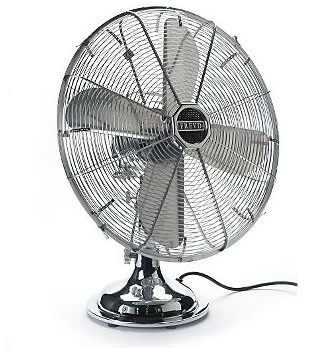
I'm a great fan of natural breezes. (Photo:blog.freeshipping.com)

Is this ‘No Aircon’ status likely to catch on?
Well the Israel Electric Corporation, our monopolistic supplier of electricity, is actually encouraging us all to cut down on our aircon this summer. If you can use less electricity during the summer of 2012 than you did in 2011, you will earn yourself a discount of up to 20% off what you pay for your electricity. (Hurry, you must register by the end of the month to be eligible). Turn your aircon on later, turn it off sooner, raise the desired temp by just a tad: these are the useful tidbits of advice from the IEC. But why are they doing this? For our health, bless ‘em? I don’t think so. To help the environment? To help the what?! No, there’s a far simpler reason. The country simply doesn’t have enough electricity!
The all-knowing, all-super IEC is deeply worried that it’s going to run out of electricity one hot day this summer. It simply cannot produce enough electricity to satisfy all the demand around the country. Electricity cannot be stored, so all electricity suppliers across the globe have to be ready at all times. But there’s no point in spending billions on having enough capacity to generate 100 kWh if demand is only for 20. And worse still would be to be in a position to supply just 20, when the country demands 100. So a well managed business would work out just the right balance: investing enough on a “regular” supply capacity, with just the right amount beyond this that would mean it’s ready “just in case”. (Oh look, I managed to get the phrase “well managed business” in the same paragraph as “the Israel Electric Corporation”. I should get a Pulitzer prize for that, surely)
Well the IEC hasn’t quite worked out that “just in case” element. So one day in the summer of 2012, someone somewhere in Israel will turn on a kettle and KABOOM, the whole neighbourhood, town or city will find itself in the dark. We’ll be left with half-ironed shirts and half-cooked buns in the oven.
A well managed electricity supplier would be ready for such an event, but the IEC, instead of planning years ahead, and making the extraordinarily large investments necessary, is instead going for the “You, hey you with the funny haircut, Cut down on your electricity use!” approach.

Now some people like to take a bash at the IEC, but I’m not one of them. You could hold me down and threaten to tickle me, and I still won’t be drawn into that populistic sport. Let others bash it, but not me.
In fact, this week, the Nameless Inefficient Committee of Mostly Politicians or Other Obsolete Penpushers, or NINCOMPOOP for short did just that. The committee (its proper name is the Public Utility Authority: Electricity) rapped the IEC's knuckles very very hard for signing an exclusive gas-supply contract with the Tamar partnership. The IEC had signed a long-term contract with Tamar, which also happens to be a monopoly, with no thought that in the future it would be able to get a better deal, at lower prices. No, instead it had happily signed the contract which, at the end of the day, would mean higher prices for... yes, you guessed it, Jo Shmo. That's you. But I hope this doesn't get you all hot and bothered, because if it does, and you're minded to turn on a fan... oh, voy, voy, we could all go KABOOM.

Wednesday, 28 March 2012

Idle hands make light work


And on the first day, the Voice in the Sky said: Let there be light.
So the Israel Electric Corporation sent round a team of ten: 1 light engineer, 1 electrician, a retired switch operator, his mate, the tea boy, the trainee, the PA, a union official to check that all was ok, and two extras, as ordained by clause 4.5(1)a of the Israel Electric How to Employ Anyone Manual. And they looked and they hummed and they hahed. Or even haahed. But mostly they hummed.
Eventually the engineer wrote a detailed report and had it sent to the New Lights Division, which read it, proofed it, photocopied it, analyzed it, sat on it, chewed it, and then put it into practice.
So finally, on the 245th day, there was light.

Of course that was just my little joke. I mean, whoever heard of an IEC engineer writing a report, and having a new light installed all within 246 days?

The Israel Electric Corporation, now there’s a sly one. They’ve been very quiet recently. Why make a fuss when they seem to be getting their way without much of a struggle, and the Bolshie workers at the Israel Railways are hogging all the limelight?
But I do believe our electricity utility needs a closer examination, just for the fun of it.
Your electricity bill, my friends, is about to leap. Yes, we’ve managed to get the cost of cottage cheese down, and even cartons of milk are facing competition. But electricity? Not bloody likely. We’ll have to wait for the next revolution for that one.
Come next Sunday, my blogpals, you will see your electricity bill leap by almost 9%. Yes, 9%. Halevai we should all be enjoying 9% pay rises. Inflation is running at just over 2% (thanks Stanley) on an annual basis, so what gives the IEC, a monopoly, the right to up our prices by more than four times the inflation rate?
It’s the price of oil, moans the IEC. That’s the problem. Higher oil prices, and a supply of gas from Egypt that keeps stopping every time revolutionary bandita, Mustafa Leak, has a tantrum.

Electricity does not grow on trees, it needs to be generated from some other form of energy - wind, sun, coal, oil, gas. The IEC has a supply of gas from Egypt, but apparently that’s not to be relied on. And when the gas gets turned off, the IEC has to turn to coal (expensive and very dirty, and not found naturally in Israel) or oil (also expensive, terribly difficult to remove if you get it on your overalls, and also not found naturally in bulk in Israel).
Now the IEC can’t just up prices, like so. Any change in its tariff has first to be approved by the Nameless Inefficient Committee of Mostly Politicians or Other Obsolete Penpushers, or NINCOMPOOP for short. So, the IEC, grumbling about high costs, unreliable gas supplies etc., goes running to NINCOMPOOP, (ok, so its real name is Public Utility Authority: Electricity) claiming it needs to raise prices by 37% just to keep solvent. Well 37% is over the top, even for a statutory monopoly, so after a chop here, a back-scratch there, a fuel tax jiggle somewhere else, approval was given for an 8.9% rise this year, followed by another rise in 2013 and another in 2014.

But where’s the incentive for the IEC to trim its fat? Why doesn’t the state set a price rise for electricity at say 3% (or the rate of the inflation), and tell the company to plan ahead and think of ways to make the company more efficient, less wasteful. It can be done.
When I was working on a building site in Jerusalem many years ago, we had to call in the IEC to move an electricity pylon. About five people turned up, and while two did the job, the rest sat on the side and counted their pensions or pointed at someone who actually did something for a living and laughed.
There is talk of changes in the electricity monopoly, but you’ll find that the IEC can dig its heels in fairly firmly when it likes.
Photo: solarenergylive.com

It took them years until they agreed to what’s known as net metering. In some countries, anyone can generate their own power, typically using solar panels. Usually you end up generating more than you need (or at least, more than you need at the time, because electricity cannot be stored). So the sensible thing is... wait for it, you’ll like this... you sell your surplus electricity back to the electric company! Your electricity meter goes the other way! This is known as net metering, and only several years after it was common practice in Germany (where they don’t even get enough sun for the solar panels), the IEC is now allowing the same thing here. Reluctantly.

The IEC had also set up a secret fund to finance all their happy perks: the holiday gifts for their workers, the free electricity for employees (current and retired), that sort of thing. But this was an illegal hoard, and last week the state ordered the company to take 90% of the funds from this kitty, and put it in with all the rest of their cash. 90% of what? How much do you think the IEC - barely able to scrape by, what with the high cost of oil and gas etc. etc.- had stashed away in this fund? TWO BILLION SHEKELS.
Think of that when you get your bigger bill next month.